New Economic Stimulus Package 2026 Debated in Congress
Anúncios
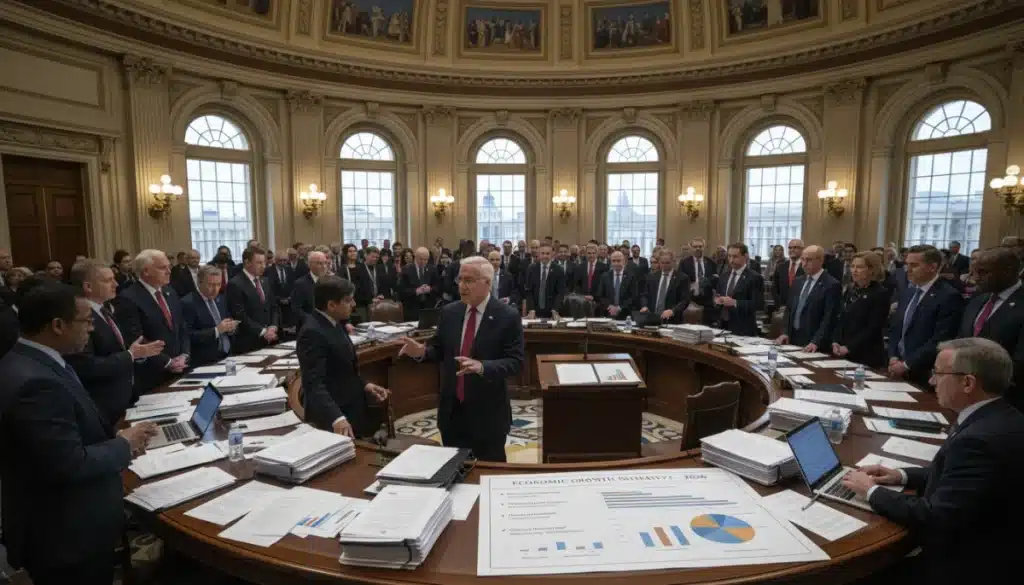
The U.S. Congress is currently engaged in a critical discussion regarding a new economic stimulus package, potentially slated for implementation in 2026.
Anúncios
The prospect of a new economic stimulus package debated in Congress for potential 2026 implementation has ignited extensive discussions across political aisles and among economic experts. As the nation navigates evolving economic landscapes, understanding the nuances of such a package is crucial for every citizen and business owner.
Anúncios
Understanding the Rationale Behind a 2026 Stimulus
The push for a new economic stimulus package in 2026 is not an isolated event but rather a response to a complex interplay of economic indicators and forecasts. Policymakers are looking ahead, anticipating potential shifts in consumer spending, labor markets, and global trade dynamics that could necessitate government intervention.
Economic stimulus packages are typically designed to inject capital into the economy during periods of slowdown or uncertainty, aiming to boost demand, encourage investment, and stabilize financial markets. The current debate reflects a proactive approach to economic management, seeking to preemptively address challenges rather than react to them.
Key Economic Indicators Driving the Discussion
- Inflationary Pressures: While recent inflation might be moderating, future projections are a key concern, influencing the size and scope of any new package.
- Labor Market Health: Employment rates and wage growth are closely monitored to ensure the economy remains robust and inclusive.
- Consumer Confidence: A dip in consumer sentiment can signal broader economic headwinds, prompting calls for supportive measures.
- Global Economic Outlook: International trade tensions and geopolitical events can have significant ripple effects on the domestic economy.
The rationale extends beyond mere stabilization; it also involves fostering long-term growth. Investments in key sectors, workforce development, and technological innovation are often components of such packages, designed to enhance the nation’s competitive edge.
Ultimately, the objective is to create a resilient economic environment that can withstand unforeseen shocks and provide sustained prosperity for American households and businesses.
Proposed Measures and Their Potential Impact
The specifics of the proposed economic stimulus package 2026 are still under intense negotiation, but several key areas have emerged as central to the discussions. These measures aim to address various facets of the economy, from direct financial relief to strategic long-term investments.
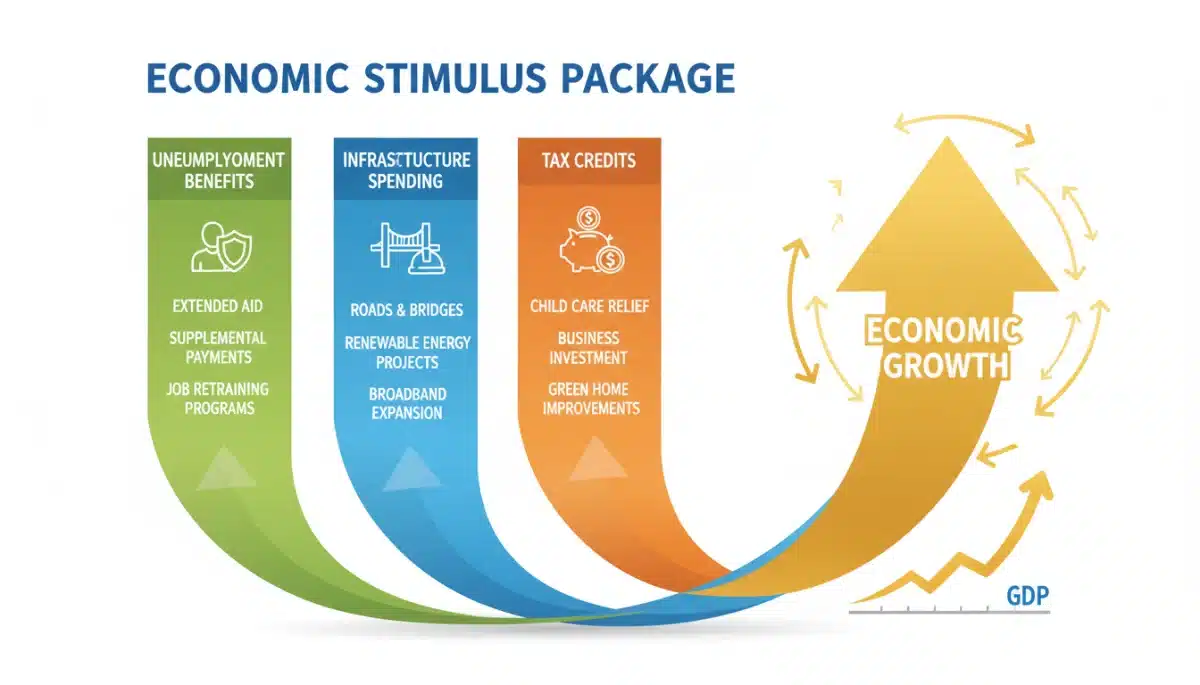
One primary focus is on direct financial aid, which could take the form of targeted payments or expanded unemployment benefits. Such measures are intended to provide immediate relief to households and stimulate consumer spending, thereby boosting demand for goods and services.
Direct Financial Relief and Social Programs
Direct payments to eligible citizens or expanded social safety nets are often considered to quickly inject money into the economy. These can help bridge financial gaps for vulnerable populations and ensure basic needs are met, preventing a deeper economic downturn.
- Targeted Payments: Direct financial assistance to low-income households or specific demographics most affected by economic shifts.
- Unemployment Benefit Extensions: Prolonging or increasing benefits for those out of work, providing a crucial safety net.
- Food Assistance Programs: Enhancements to programs like SNAP, ensuring food security for families in need.
Beyond immediate relief, there’s also a strong emphasis on infrastructure spending. Investments in roads, bridges, public transit, and broadband internet are seen as dual-purpose: creating jobs in the short term and improving productivity and connectivity in the long run.
The potential impact of these measures is wide-ranging. While direct aid can provide immediate economic uplift, infrastructure projects offer sustained job creation and foundational improvements, benefiting the economy for decades to come.
Congressional Debate: Bipartisan Challenges and Opportunities
The debate surrounding the new economic stimulus package debated in Congress for potential 2026 implementation highlights the inherent complexities of legislative action in a divided political landscape. Reaching a consensus on the scope, funding, and target beneficiaries of such a significant package requires extensive negotiation and compromise.
Different political factions often hold divergent views on economic policy, with some advocating for broad, expansive spending and others prioritizing fiscal conservatism and targeted interventions. These ideological differences invariably shape the contours of the debate, presenting both challenges and opportunities for bipartisan cooperation.
Areas of Disagreement and Potential Compromise
One significant point of contention often revolves around the overall cost of the package and its potential impact on the national debt. Lawmakers must weigh the immediate economic benefits against long-term fiscal responsibilities.
- Size and Scope: Disagreements on the total budget allocated and the breadth of programs included.
- Funding Mechanisms: Debates over whether to raise taxes, issue more debt, or reallocate existing funds.
- Eligibility Criteria: Defining who qualifies for aid and what sectors receive investment can be highly contentious.
Despite these challenges, there are also opportunities for bipartisan agreement, particularly in areas like infrastructure development or investments in emerging technologies that promise future economic growth. Finding common ground on such initiatives can pave the way for a more comprehensive package.
The negotiation process is dynamic, with various proposals and counter-proposals being put forth, aiming to balance competing priorities and craft a package that garners sufficient support to pass both chambers of Congress.
Anticipated Economic Outcomes and Expert Projections
Economists and financial analysts are closely scrutinizing the ongoing congressional debate, offering a range of projections regarding the potential economic outcomes of a new economic stimulus package debated in Congress for potential 2026 implementation. These projections consider various factors, including the package’s size, its specific components, and the prevailing economic conditions at the time of its implementation.
One common forecast is that a well-designed stimulus package could provide a significant boost to GDP growth, particularly if it targets sectors with high multiplier effects. This means that every dollar invested generates more than a dollar in economic activity.
Short-term vs. Long-term Effects
In the short term, increased consumer spending from direct aid and job creation from infrastructure projects are expected to drive immediate economic expansion. However, the long-term effects are equally important, focusing on sustainable growth and enhanced productivity.
- Short-term Boost: Immediate increase in consumer demand, temporary job creation, and stabilization of markets.
- Long-term Growth: Improved infrastructure, technological advancements, and a more skilled workforce leading to sustained economic competitiveness.
- Inflationary Risks: Concerns that an overly large stimulus could exacerbate inflationary pressures, requiring careful monetary policy adjustments.
Experts also caution about potential risks, such as increased national debt and the possibility of overheating the economy if the stimulus is too large or poorly timed. The timing of implementation in 2026 is critical, as economic conditions can evolve rapidly.
Ultimately, the effectiveness of the package will be measured by its ability to achieve its stated goals without creating undue financial burdens or unintended negative consequences for the broader economy.
Historical Context: Lessons from Previous Stimulus Efforts
Understanding the potential impact of the economic stimulus package 2026 requires a look back at previous stimulus efforts in U.S. history. Each past package, whether enacted during recessions or periods of slow growth, offers valuable lessons about what works, what doesn’t, and the unforeseen challenges that can arise.
From the New Deal programs of the Great Depression to the responses to the 2008 financial crisis and the COVID-19 pandemic, stimulus measures have taken various forms, from public works projects to tax rebates and direct payments. Analyzing these historical precedents provides critical insights for current policymakers.
Key Takeaways from Past Stimulus Packages
One recurring lesson is the importance of timely and targeted intervention. Stimulus measures are most effective when implemented swiftly during periods of economic distress and directed towards areas where the impact will be most profound.
- Timeliness is Key: Delays in implementation can reduce effectiveness as economic conditions shift.
- Targeted Approach: Directing funds to specific sectors or demographics can maximize impact and minimize waste.
- Infrastructure’s Enduring Value: Investments in infrastructure often provide lasting benefits beyond immediate job creation.
- Monitoring and Adjustments: The need for continuous monitoring and flexibility to adjust programs based on real-time economic data.
However, history also shows that stimulus packages are not without their critics and challenges. Debates over the long-term effects on national debt, potential for inflation, and the efficiency of government spending are common themes.
By learning from both the successes and shortcomings of previous efforts, Congress can refine its approach to the 2026 package, aiming for maximum positive impact while mitigating potential downsides.
Public Opinion and Stakeholder Perspectives
The debate over the new economic stimulus package debated in Congress for potential 2026 implementation highlights the inherent complexities of legislative action in a divided political landscape. Reaching a consensus on the scope, funding, and target beneficiaries of such a significant package requires extensive negotiation and compromise.
Surveys and polls often reveal a complex mix of public sentiment, with many Americans supporting measures that provide direct relief or create jobs, while others express concerns about government spending and its long-term implications. Businesses, labor unions, and advocacy groups also offer distinct viewpoints, each with their own set of priorities and recommendations.
Diverse Perspectives on Economic Intervention
Small business owners, for instance, might advocate for tax credits or loan programs to help them grow and hire, while larger corporations may focus on regulatory relief or incentives for investment. Labor unions typically champion measures that protect workers’ rights and ensure fair wages.
- General Public: Often prioritizes direct financial relief and job creation.
- Businesses: Seeks incentives for investment, tax breaks, and regulatory stability.
- Labor Unions: Focuses on worker protections, wage increases, and job security.
- Economists: Provides data-driven analysis, weighing benefits against potential risks like inflation or debt.
These diverse perspectives highlight the challenge of crafting a stimulus package that satisfies a broad range of interests while effectively addressing national economic goals. Public hearings, town halls, and constituent feedback all contribute to the legislative process, ensuring that a variety of voices are heard.
Ultimately, the success of the package will not only depend on its economic efficacy but also on its ability to garner public trust and support, reflecting the collective needs and aspirations of the American people.
| Key Point | Brief Description |
|---|---|
| Congressional Debate | Intense discussions in Congress over the scope and funding of the 2026 stimulus package. |
| Proposed Measures | Includes direct financial aid, infrastructure spending, and social program enhancements. |
| Economic Impact | Anticipated GDP growth, job creation, with considerations for inflation and national debt. |
| Historical Lessons | Past stimulus efforts inform current strategies, emphasizing timeliness and targeting. |
Frequently Asked Questions About the 2026 Stimulus
The primary goal is to proactively address potential economic challenges, stimulate growth, and stabilize the U.S. economy by boosting demand, encouraging investment, and supporting households and businesses.
Measures under consideration include direct financial aid to households, expanded unemployment benefits, significant investments in infrastructure, and enhancements to various social programs to support vulnerable populations and stimulate economic activity.
The package is currently being debated in Congress with a potential implementation timeline set for 2026. This allows for thorough legislative review and preparation, aiming for optimal timing to counter anticipated economic shifts.
Key challenges include achieving bipartisan consensus on the package’s overall cost, specific funding mechanisms, and the eligibility criteria for beneficiaries, requiring extensive negotiation among different political factions.
Economists are carefully evaluating the potential for the package to increase the national debt and possibly exacerbate inflationary pressures. The design and size of the stimulus will be critical in mitigating these risks while achieving economic benefits.
Conclusion
The ongoing debate in Congress over a new economic stimulus package for potential 2026 implementation underscores a proactive approach to economic governance. While balancing diverse political interests and economic theories, policymakers aim to craft a comprehensive plan that fosters growth, stability, and resilience. The decisions made in the coming months will undoubtedly shape the economic trajectory of the nation, influencing everything from household budgets to major industrial investments. As discussions evolve, staying informed about the proposed measures and their potential impacts will be essential for all Americans.
