Automating Finances: Save 20% Effortlessly by 2026

Anúncios
Automating your finances is the most effective way to effortlessly save 20% of your income by 2026, creating a robust path to financial freedom.
Anúncios
Are you ready to transform your financial future? In an increasingly digital world, Automating Your Finances: Saving 20% of Your Income Effortlessly in 2026 is not just a dream, but an achievable reality. This guide will walk you through the essential steps to set up a seamless system that works for you, ensuring your money grows without constant oversight.
Anúncios
Understanding the Power of Financial Automation
Financial automation is more than just setting up recurring transfers; it’s a strategic approach to money management that leverages technology to handle your finances proactively. By removing human error and emotional decision-making from the equation, automation ensures consistency in your saving and investing habits, paving the way for significant wealth accumulation.
The core principle lies in ‘set it and forget it’—designing a system where your money moves automatically from your checking account to various savings, investment, and bill payment accounts. This systematic approach guarantees that a portion of your income is always allocated to your financial goals before you even have a chance to spend it. This proactive method is crucial for anyone aiming to significantly boost their savings rate.
The Psychological Benefits of Automation
- Reduced Stress: Knowing your financial obligations and savings goals are being met automatically can significantly lower financial anxiety.
- Increased Consistency: Automation eliminates the need for manual transfers, ensuring you consistently save and invest, even when life gets busy.
- Enhanced Discipline: It instills financial discipline by making saving a default action rather than a conscious effort.
Embracing financial automation allows you to regain control over your money, transforming your relationship with personal finance from one of constant struggle to one of effortless progress. It’s about building a robust financial foundation that supports your aspirations for a secure future, making the goal of saving 20% of your income not just feasible, but genuinely effortless.
Setting Up Your Automated Savings System for 20%
Achieving a 20% savings rate requires a structured, automated approach. The first step involves a clear understanding of your income and expenses, followed by strategically redirecting a portion of your earnings. This isn’t about drastic cuts, but smart allocation, ensuring your money works harder for you without feeling restrictive.
Begin by analyzing your net income after taxes. Once you have this figure, calculate 20% of it. This is your target savings amount. Then, review your current banking services to identify options for automated transfers. Most banks offer robust online platforms that allow you to schedule recurring transfers to different accounts. This is where the ‘effortless’ aspect truly begins to shine.
Key Steps to Implement Automated Savings
- Direct Deposit Allocation: Many employers allow you to split your direct deposit across multiple accounts. Direct a portion (ideally your 20% savings target) directly into a separate savings or investment account. This is often the most effective method, as the money never even touches your primary checking account.
- Automated Bank Transfers: If direct deposit splitting isn’t an option, set up automatic transfers from your checking account to your savings/investment accounts on the day you get paid. Schedule these transfers to occur immediately, ensuring your savings are prioritized.
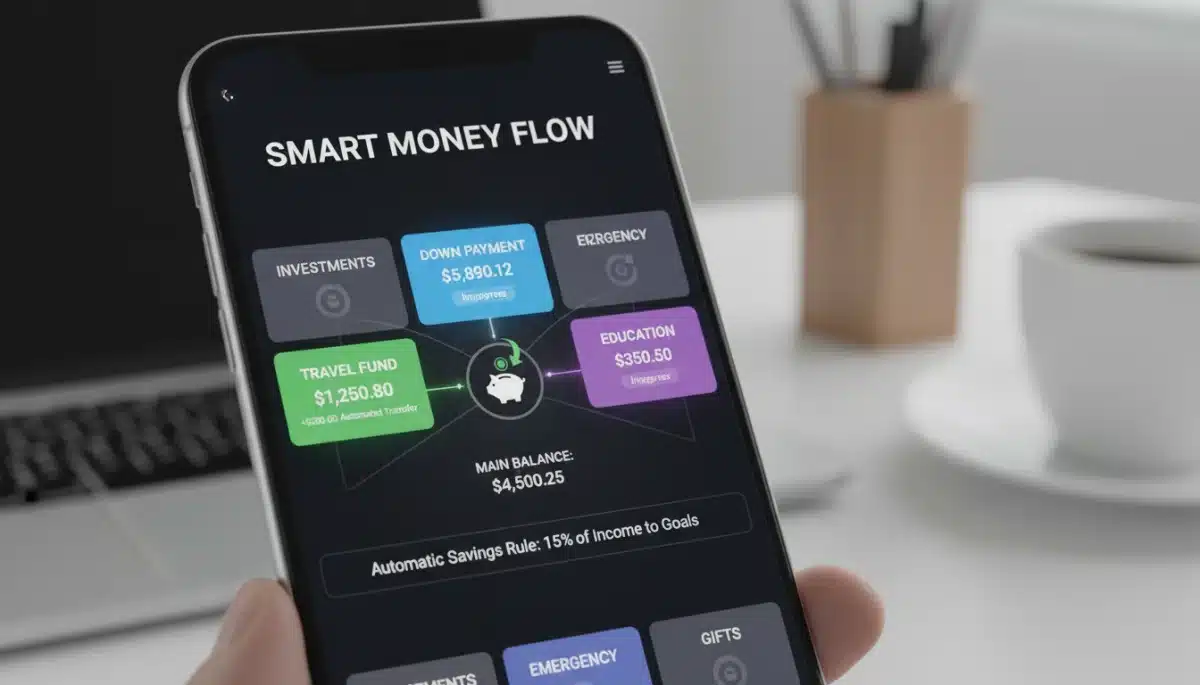
- Multiple Savings Goals: Create separate savings accounts for different goals, such as an emergency fund, down payment, or retirement. This helps visualize progress and maintains motivation.
By diligently setting up these automated systems, you establish a financial rhythm that prioritizes your savings. This systematic approach ensures that your 20% savings goal is consistently met, building your financial resilience and accelerating your journey towards long-term financial security. The beauty of this method lies in its simplicity and reliability, making saving a habit rather than a chore.
Optimizing Your Budget for Maximum Automation Impact
While automation handles the transfers, optimizing your budget ensures you have enough income available to save that crucial 20%. This involves a thorough review of your spending habits and identifying areas where you can reallocate funds without significantly impacting your quality of life. The goal is to create a lean, efficient budget that supports your automated savings goals.
Start by tracking your expenses for at least a month. Use budgeting apps or spreadsheets to categorize every dollar spent. This granular view will reveal patterns and potential areas for adjustment. Look for recurring subscriptions you no longer use, excessive spending in certain categories like dining out, or opportunities to reduce utility costs. Every dollar freed up can be redirected towards your automated savings.
Strategies for Budget Optimization
- The 50/30/20 Rule: A popular budgeting guideline suggests allocating 50% of your income to needs, 30% to wants, and 20% to savings and debt repayment. While your goal is 20% savings, this framework helps balance your spending.
- Negotiate Bills: Take time to call providers for internet, cable, and insurance to negotiate lower rates. Many companies offer loyalty discounts or competitive plans if you ask.
- Meal Planning: Planning your meals in advance and cooking at home can significantly reduce food expenses, a common budgetbuster.
Optimizing your budget is an ongoing process, not a one-time event. Regularly reviewing your expenses and making small adjustments can have a profound cumulative effect on your ability to save. By consciously aligning your spending with your financial goals, you empower your automated savings system to work at its maximum potential, solidifying your path to a healthier financial future.
Leveraging Technology: Apps and Tools for Effortless Saving
In 2026, a myriad of financial technology (fintech) tools and apps are available to make Automating Your Finances even more seamless. These tools can help you track spending, identify savings opportunities, and even automate investments, all from the convenience of your smartphone or computer. Choosing the right tools can significantly enhance your ability to save 20% of your income effortlessly.
Many banking apps now offer advanced features like automatic categorization of transactions, spending insights, and even micro-saving options that round up your purchases to the nearest dollar and transfer the difference to savings. Exploring these built-in features can be a great starting point. Beyond your bank, several independent apps specialize in different aspects of financial management, from budgeting to investing.
Essential Fintech Tools for Automation
- Budgeting Apps: Tools like Mint, YNAB (You Need A Budget), or Personal Capital help you track spending, create budgets, and often link directly to your bank accounts for real-time updates.
- Automated Investment Platforms: Robo-advisors such as Betterment or Wealthfront automate your investments based on your risk tolerance and financial goals, making investing accessible and hands-off.
- Savings Apps: Apps like Acorns or Chime can automate small savings, often by rounding up transactions or offering high-yield savings accounts with automated transfers.
Integrating these technological solutions into your financial routine can transform the way you manage your money. They provide valuable insights, automate complex tasks, and keep you accountable to your saving goals without requiring constant manual input. By wisely selecting and utilizing these tools, you can ensure your automated financial system is robust, efficient, and truly effortless.
Automating Your Investments for Long-Term Growth
Saving 20% of your income is a significant achievement, but to truly build wealth, that money needs to be put to work through automated investments. Investing regularly, regardless of market fluctuations, is a cornerstone of long-term financial success. By automating your contributions to investment accounts, you harness the power of dollar-cost averaging and compound interest, accelerating your journey towards financial independence.
Consider setting up automatic transfers from your checking or savings account directly into your investment vehicles. This could include a 401(k) or 403(b) through your employer, an Individual Retirement Account (IRA), or a taxable brokerage account. The key is consistency. Just as with savings, having these contributions occur automatically ensures you never miss an opportunity to invest, regardless of daily distractions.
Types of Automated Investment Accounts
- Employer-Sponsored Plans (401k/403b): Maximize your contributions, especially if your employer offers a matching program. This is essentially free money and should be prioritized.
- Roth IRA/Traditional IRA: Set up automatic monthly or bi-weekly contributions to these retirement accounts. Robo-advisors can manage these for you, making it even simpler.
- Taxable Brokerage Accounts: For savings beyond retirement accounts, automate contributions to a general investment account for mid-term goals like a down payment on a house or early retirement.
Automating your investments ensures that your money is continually growing, benefiting from market returns and the power of compounding. This hands-off approach not only simplifies wealth building but also removes the emotional element from investment decisions, leading to more disciplined and ultimately more successful outcomes. It is a critical component of making your 20% savings rate truly impactful for your future.
Regular Review and Adjustment of Your Automated System
While the goal of automation is to make finances effortless, it doesn’t mean setting it up once and forgetting about it forever. Regular review and adjustment of your automated system are crucial to ensure it remains aligned with your evolving financial goals and life circumstances. Life changes, and so should your financial strategy, albeit with minimal effort.
Schedule quarterly or semi-annual check-ins with your automated financial system. During these reviews, assess if your 20% savings rate is still appropriate, if your investment allocations are still suitable for your risk tolerance, and if any new financial products or services could further optimize your setup. This proactive maintenance ensures your system remains efficient and effective over time.
What to Review During Your Check-ins
- Income and Expenses: Have your income or major expenses changed? Adjust your automated transfers accordingly.
- Financial Goals: Are your goals still the same? Perhaps you’ve achieved one goal and need to redirect funds to a new one.
- Investment Performance: While you shouldn’t react to short-term market fluctuations, ensure your investments are performing generally as expected and that your asset allocation still fits your strategy.
- Fees: Check for any hidden fees or opportunities to reduce costs with your financial institutions or investment platforms.
By dedicating a small amount of time to these regular reviews, you ensure your automated financial system continues to serve your best interests. This adaptable approach prevents your system from becoming outdated and ensures you are always on the most efficient path to achieving and exceeding your financial objectives, making your journey towards financial freedom both automated and intelligently managed.
| Key Point | Brief Description |
|---|---|
| Automated Transfers | Set up recurring transfers to savings and investment accounts for consistent growth. |
| Budget Optimization | Analyze spending to free up funds, ensuring a 20% savings rate is achievable. |
| Leverage Fintech Tools | Utilize apps and robo-advisors for budgeting, saving, and automated investing. |
| Regular Reviews | Periodically check and adjust your automated system to align with changing goals. |
Frequently Asked Questions About Financial Automation
While 20% is a strong target for significant wealth building, the ideal percentage can vary based on individual circumstances and financial goals. Many experts recommend starting with at least 10-15% and gradually increasing it as your income grows or expenses decrease. The key is consistency and making it an automatic habit.
Even with debt, automation is beneficial. Prioritize automating minimum debt payments to avoid late fees. Then, allocate a small portion to savings (e.g., an emergency fund). Once that’s established, focus on automating extra payments to high-interest debt, using strategies like the debt snowball or avalanche method, alongside your savings goals.
Yes, reputable robo-advisors are generally safe. They are regulated by financial authorities and employ advanced security measures to protect your investments and personal data. They typically invest in diversified portfolios of exchange-traded funds (ETFs) or mutual funds, which helps mitigate risk, making them a reliable option for automated investing.
Absolutely. Automating bill payments is a core component of financial automation. Most service providers and banks offer options to set up recurring payments directly from your checking account. This ensures bills are paid on time, avoiding late fees and maintaining a good credit score. Always ensure you have sufficient funds before the payment date.
Yes, even with irregular income, you can automate savings. The key is to automate a smaller, consistent amount you know you can always afford. When you have higher-income months, manually transfer an additional amount to boost your savings. This hybrid approach ensures you’re always saving something while capitalizing on better months.
Conclusion
Achieving the goal of Automating Your Finances: Saving 20% of Your Income Effortlessly in 2026 is entirely within reach. By understanding the principles of financial automation, setting up systematic transfers, optimizing your budget, leveraging modern fintech tools, and consistently reviewing your system, you can build a robust financial future. This journey is not about deprivation but about smart, strategic money management that prioritizes your long-term well-being and financial freedom, allowing you to enjoy life while your money works tirelessly for you.
