Credit Card Interest Rates 2026: Fed Policy Impact
Anúncios
Understanding 2026 credit card interest rates requires foresight into Federal Reserve policies and broader economic trends that directly influence borrowing costs for consumers.
Anúncios
As we look towards 2026, the question of how credit card interest rates will evolve is paramount for millions of Americans managing their personal finances. The Federal Reserve’s monetary policy decisions are the primary driver, shaping everything from mortgage rates to the cost of carrying a credit card balance. What can consumers expect, and how can they prepare for potential shifts?
Anúncios
Understanding the Federal Reserve’s Role in Interest Rates
The Federal Reserve, often simply called the Fed, plays a pivotal role in the U.S. economy, primarily through its influence on interest rates. Its decisions ripple through financial markets, directly affecting the cost of borrowing for individuals and businesses alike. Predicting credit card interest rates in 2026 necessitates a deep dive into the Fed’s potential strategies and the economic landscape it will be navigating.
The Fed’s main tool for influencing interest rates is the federal funds rate, a target rate for overnight lending between banks. While not directly setting credit card rates, changes in the federal funds rate typically lead to corresponding adjustments in the prime rate, which credit card issuers use as a benchmark for their variable Annual Percentage Rates (APRs).
The Dual Mandate: Inflation and Employment
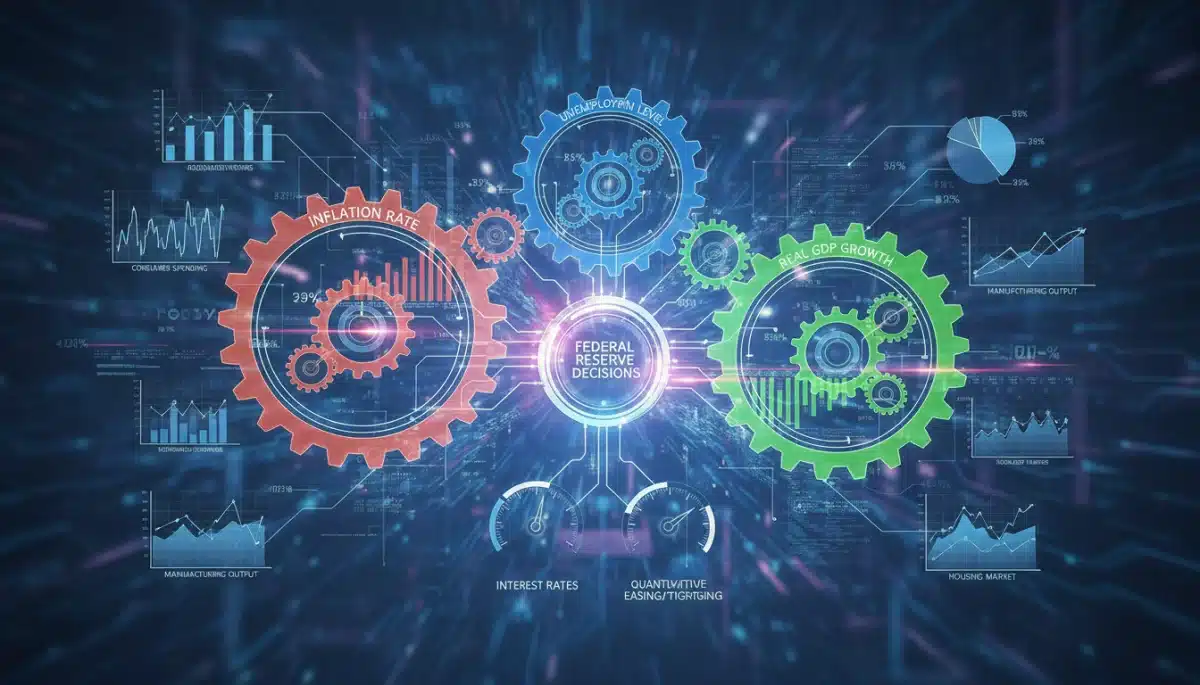
The Federal Reserve operates under a dual mandate: to maximize employment and maintain price stability, which essentially means controlling inflation. In 2026, the Fed’s policy decisions will be heavily influenced by the prevailing economic conditions, particularly inflation levels and the strength of the labor market.
- Inflation Control: If inflation remains elevated or resurges, the Fed may be inclined to keep interest rates higher or even implement further rate hikes to cool down the economy and bring prices under control.
- Employment Levels: A robust job market with low unemployment might give the Fed more flexibility to raise rates without fear of stifling economic growth too severely. Conversely, signs of a weakening labor market could prompt the Fed to consider rate cuts to stimulate economic activity.
- Economic Growth: The overall pace of economic growth will also factor into the Fed’s decisions. A booming economy might tolerate higher rates, while a slowdown could necessitate looser monetary policy.
In essence, the Fed’s actions in 2026 will be a careful balancing act, responding to incoming economic data and aiming to steer the economy towards sustainable growth without excessive inflation or unemployment. These macroeconomic factors are the bedrock upon which future credit card interest rate predictions are built.
Forecasting Economic Conditions for 2026
Forecasting economic conditions for 2026 is a complex undertaking, involving numerous variables that can shift rapidly. However, by analyzing current trends and expert projections, we can develop a clearer picture of the environment in which credit card interest rates will operate. Key indicators such as inflation, GDP growth, and unemployment rates will be critical.
As we approach 2026, economists will be closely watching for signs of economic stability or volatility. A sustained period of moderate inflation and steady growth would provide the Fed with a comfortable path, potentially leading to stable or slightly decreasing interest rates. However, unforeseen global events or domestic policy changes could easily disrupt such a trajectory.
Inflationary Pressures and Supply Chains
One of the most persistent challenges in recent years has been inflation. While some inflationary pressures may subside by 2026, new factors could emerge. Global supply chain resilience, geopolitical stability, and commodity prices will all play a significant role in determining the future path of inflation.
- Energy Prices: Fluctuations in oil and gas prices can have a broad impact on consumer costs and business expenses, contributing to inflationary pressures.
- Labor Market Dynamics: Wage growth, driven by labor shortages or increased bargaining power, can also contribute to inflation, especially in service-oriented sectors.
- Technological Advancements: Conversely, technological innovations could lead to increased efficiency and lower production costs, potentially easing inflationary pressures over the long term.
The interplay of these factors will dictate whether the Fed feels compelled to maintain a restrictive monetary policy or if it can afford to ease up. Consumers should be mindful of these broader economic signals, as they directly influence the cost of borrowing on their credit cards. The economic health of the nation is intrinsically linked to the rates consumers pay.
Potential Scenarios for Credit Card Interest Rates in 2026
Given the intricate relationship between Federal Reserve policy and economic conditions, several scenarios could unfold for credit card interest rates in 2026. Each scenario carries different implications for consumers, highlighting the importance of understanding the potential range of outcomes. These scenarios are not mutually exclusive and could evolve based on new data.
It’s crucial for consumers to recognize that credit card rates are typically variable, meaning they are tied to a benchmark like the prime rate, which in turn is heavily influenced by the federal funds rate. Therefore, any movement in the Fed’s policy rate will likely be reflected in credit card APRs, albeit with a slight lag.
Scenario 1: Rates Remain Elevated
If inflation proves more stubborn than anticipated or if the economy continues to show robust growth, the Fed might maintain a higher federal funds rate throughout 2026. This would translate to credit card interest rates remaining at or near their current elevated levels, making it more expensive to carry a balance.
Scenario 2: Gradual Rate Decreases
Should inflation steadily decline towards the Fed’s target of 2% and the labor market show signs of cooling without a significant recession, the Fed could begin a series of gradual rate cuts. This scenario would lead to a modest decrease in credit card APRs, offering some relief to consumers with outstanding balances.
Scenario 3: Volatility and Unpredictability
A less stable economic environment, perhaps due to unexpected geopolitical events, supply chain disruptions, or significant shifts in consumer spending, could lead to greater volatility in Fed policy. This unpredictability would make credit card interest rates fluctuate, requiring consumers to be agile in their financial management.
Each of these scenarios presents unique challenges and opportunities. Consumers should consider their personal financial situation against these possibilities, focusing on strategies that offer resilience against rising rates and leverage opportunities if rates decline. Preparing for varying outcomes is key to financial well-being in 2026.
Impact on Consumer Balances and Spending Habits
The trajectory of credit card interest rates in 2026 will have a direct and significant impact on consumer balances and, consequently, on spending habits. Higher rates mean a greater portion of monthly payments goes towards interest, rather than principal, making it harder to pay down debt. This can lead to a tightening of household budgets and a shift in consumer behavior.
For consumers carrying significant credit card debt, even a modest increase in APR can translate into hundreds of dollars in additional interest payments over the course of a year. This financial strain can force individuals to cut back on discretionary spending, impacting sectors of the economy reliant on consumer purchases.
Managing High-Interest Debt
In an environment of elevated or rising interest rates, managing high-interest credit card debt becomes even more critical. Consumers will need to adopt proactive strategies to mitigate the impact on their finances.
- Prioritize Payments: Focus on paying down cards with the highest APRs first to minimize overall interest costs.
- Balance Transfers: Consider balance transfer cards with introductory 0% APR offers, but be mindful of fees and the promotional period’s end.
- Debt Consolidation: Explore options like personal loans with fixed interest rates to consolidate high-interest credit card debt into a more manageable payment.
Conversely, if interest rates decline, consumers might find it easier to pay off their balances, potentially freeing up income for other expenditures or savings. However, lower rates could also encourage some to take on more debt, a behavior that requires careful consideration to avoid future financial strain. The psychological effect of interest rates on spending is often underestimated, but it plays a crucial role in economic cycles.
Strategies for Consumers to Prepare for 2026
Regardless of the specific direction credit card interest rates take in 2026, proactive preparation is essential for consumers. Developing sound financial habits and understanding available tools can help mitigate risks and capitalize on opportunities. The key is to build resilience into personal financial plans.
Financial literacy and strategic planning are more important than ever. By taking concrete steps now, consumers can position themselves to navigate the economic landscape of 2026 with greater confidence and control over their credit card debt. This includes regular reviews of credit reports and understanding the terms of their credit agreements.
Building a Strong Financial Foundation
- Emergency Fund: Establish or bolster an emergency fund to cover unexpected expenses, reducing the reliance on credit cards for emergencies.
- Budgeting: Create and stick to a realistic budget to track income and expenses, ensuring that credit card spending remains within manageable limits.
- Credit Score Improvement: Work on improving your credit score, as a higher score can qualify you for better interest rates on new credit products or balance transfer offers.
Proactive Debt Management
For those carrying credit card balances, actively managing that debt will be paramount. This involves not just making minimum payments, but strategically reducing the principal amount. Understanding the nuances of your credit card agreements, especially variable APR clauses, is a critical first step.
Consider consulting with a financial advisor to explore personalized strategies for debt reduction and financial planning. They can provide tailored advice based on your specific situation and help you develop a robust plan for 2026 and beyond. Taking control of your financial future starts with informed decisions today.
Beyond 2026: Long-Term Outlook and Financial Prudence
While our focus is on 2026, understanding the long-term outlook for credit card interest rates and adopting enduring financial prudence is equally vital. The economic cycle is continuous, and what happens in 2026 will lay the groundwork for subsequent years. A forward-thinking approach to personal finance ensures sustained stability.
The Federal Reserve’s long-term goals typically involve maintaining a stable economic environment with moderate inflation and full employment. This suggests that while there may be fluctuations, extreme and prolonged periods of exceptionally high or low interest rates are less likely in the very long run. However, short-to-medium term volatility is always a possibility.
Adapting to a Changing Financial Landscape
The financial landscape is constantly evolving, influenced by technological advancements, global economic shifts, and regulatory changes. Consumers who remain adaptable and continuously educate themselves about financial trends will be better positioned to thrive.
- Diversify Savings: Don’t put all your financial eggs in one basket. Diversify savings and investments to hedge against different economic conditions.
- Stay Informed: Regularly follow economic news and Federal Reserve announcements to anticipate potential changes in interest rate policy.
- Review Financial Products: Periodically review your credit cards and other financial products to ensure they still meet your needs and offer competitive rates.
Ultimately, the most effective long-term strategy involves a combination of disciplined saving, responsible borrowing, and continuous learning. By building a strong financial foundation and remaining vigilant, consumers can navigate the complexities of credit card interest rates, not just in 2026, but for many years to come. Financial prudence is a journey, not a destination.
| Key Point | Brief Description |
|---|---|
| Fed’s Influence | Federal Reserve policy on the federal funds rate directly impacts credit card APRs. |
| Economic Outlook 2026 | Inflation, employment, and GDP growth will guide Fed decisions and rate movements. |
| Consumer Impact | Rate changes affect monthly payments, debt management, and spending habits. |
| Preparation Strategies | Budgeting, emergency funds, and credit score improvement are key for consumers. |
Frequently Asked Questions About 2026 Credit Card Rates
The Federal Reserve sets the federal funds rate, which banks use as a benchmark. Credit card issuers then base their variable APRs on the prime rate, which closely tracks the federal funds rate. Thus, Fed rate changes directly translate to shifts in credit card interest rates for consumers.
Key indicators include inflation rates (Consumer Price Index, Personal Consumption Expenditures), unemployment rates, and Gross Domestic Product (GDP) growth. These data points guide the Fed’s decisions regarding monetary policy, influencing future credit card rates.
Most credit cards have variable interest rates, meaning they fluctuate with the prime rate. If you have a rare fixed-rate card, its APR will not change due to Fed policy unless the issuer provides advance notice and allows you to opt out or pay off your balance.
Prioritize paying down high-APR balances, consider balance transfer cards with introductory 0% APRs, or explore debt consolidation options like personal loans. Maintaining a strong credit score can also help you access better terms on new credit products.
Build an emergency fund, create a realistic budget, and consistently work on improving your credit score. Staying informed about economic trends and reviewing your credit card terms regularly will also help you adapt to any changes.
Conclusion
The landscape of credit card interest rates in 2026 will undeniably be shaped by the Federal Reserve’s policy decisions, which in turn respond to the broader economic environment. While predicting the exact trajectory remains challenging, understanding the interplay between inflation, employment, and monetary policy empowers consumers to prepare effectively. By adopting proactive financial strategies, such as diligent budgeting, debt management, and continuous financial education, individuals can navigate potential rate fluctuations with greater confidence. The coming years will emphasize the importance of financial prudence and adaptability, ensuring that consumers remain resilient regardless of how interest rates evolve.
