Decoding EMV Chip Card Security Updates for U.S. Consumers 2026
Anúncios
The latest EMV chip card security updates for U.S. consumers in 2026 introduce advanced encryption and authentication protocols to safeguard transactions and combat evolving fraud.
Anúncios
As we approach 2026, understanding the latest EMV chip card security updates for U.S. consumers is more crucial than ever. These advancements are designed to fortify your financial transactions against an increasingly sophisticated landscape of digital threats, ensuring greater peace of mind with every swipe, tap, or dip.
Anúncios
The evolution of EMV technology: A brief overview
EMV technology, named after Europay, MasterCard, and Visa, revolutionized payment security by embedding a microchip into credit and debit cards. This chip generates a unique cryptogram for each transaction, making it incredibly difficult for fraudsters to clone cards or replicate transaction data. The initial rollout in the U.S. marked a significant shift from magnetic stripe technology, drastically reducing counterfeit card fraud.
However, the digital threat landscape constantly evolves, necessitating continuous updates to security protocols. What was cutting-edge a few years ago might now have vulnerabilities that sophisticated criminals can exploit. The updates for 2026 are a testament to the industry’s commitment to staying ahead of these threats, ensuring that consumer data remains protected even as new attack vectors emerge.
Key milestones in EMV adoption
- 2015 Liability Shift: This was a pivotal moment, shifting the liability for counterfeit card fraud from card issuers to merchants if they hadn’t adopted EMV-compliant terminals.
- Increased Consumer Trust: The visible security features of EMV cards helped build consumer confidence in electronic transactions.
- Foundation for Future Innovations: EMV paved the way for contactless payments and mobile wallets, building on its secure infrastructure.
The journey of EMV technology is one of continuous improvement. Each update builds upon the last, integrating lessons learned from real-world fraud attempts and anticipating future challenges. These ongoing enhancements are vital for maintaining the integrity of the payment ecosystem and protecting consumers from financial harm. The forthcoming updates in 2026 are not just incremental changes; they represent a significant leap forward in security capabilities, addressing a new generation of threats.
Understanding the core principles of EMV security
At its heart, EMV security relies on dynamic data generation. Unlike magnetic stripe cards, which transmit static data that can be easily copied, EMV chips produce unique transaction data each time the card is used. This process is known as cryptogram generation. Even if a fraudster intercepts the data from one transaction, it cannot be used to authorize another, rendering counterfeit cards largely ineffective.
The chip also performs sophisticated authentication processes, verifying both the card and the cardholder. This dual-layer authentication significantly enhances security. The card itself authenticates to the terminal, and in many cases, the cardholder is authenticated through a PIN or signature. These layers make it exceedingly difficult for unauthorized individuals to use a stolen card, even if they manage to acquire its physical form.
How cryptograms enhance security
The unique cryptogram generated for each transaction acts as a digital fingerprint. This cryptogram is a complex string of data that includes transaction-specific details, such as the amount, date, and a unique identifier. If any of this data is tampered with, the cryptogram will not validate, and the transaction will be declined. This makes “skimming” EMV cards for future fraudulent use virtually impossible.
- Dynamic Data: Each transaction creates new, unique data.
- Tamper-Resistant: Data cannot be altered without invalidating the cryptogram.
- Fraud Prevention: Effectively prevents counterfeit card fraud.
These core principles form the bedrock of EMV security, and the 2026 updates aim to strengthen them further. By enhancing the complexity and resilience of cryptogram generation and authentication methods, the industry is building an even more robust defense against increasingly sophisticated cyber threats. Consumers can feel more secure knowing that the underlying technology is continuously being refined to protect their financial information.
Key security enhancements arriving in 2026
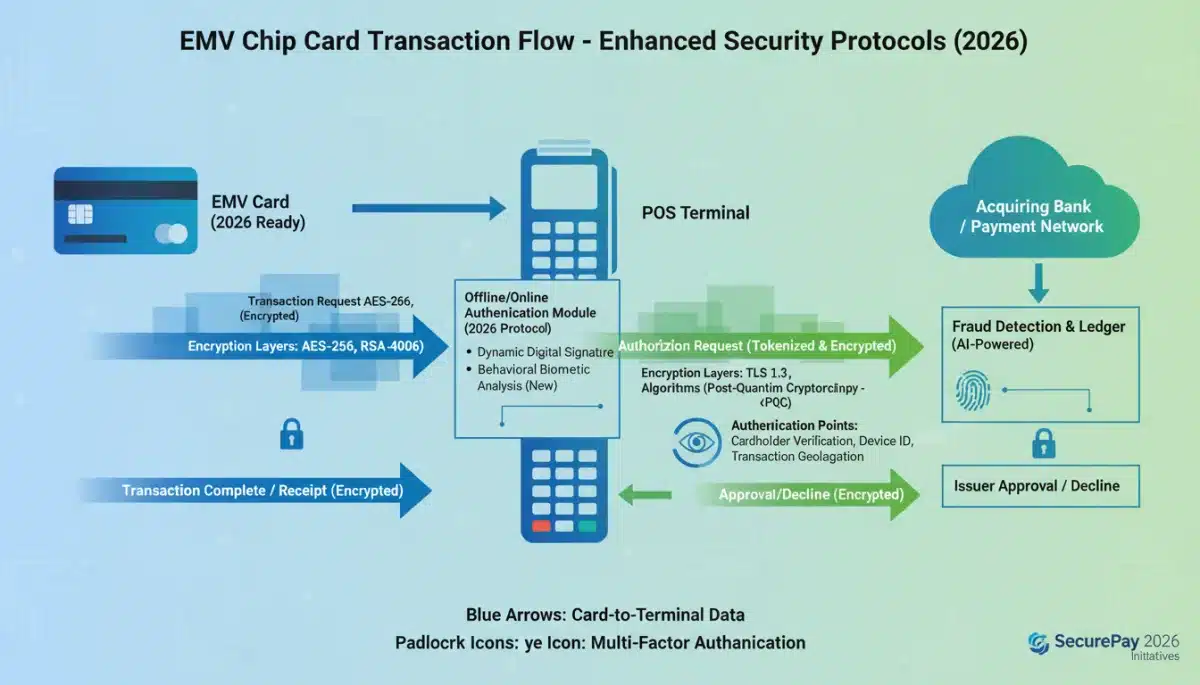
The EMV chip card security updates for U.S. consumers in 2026 are set to introduce several significant enhancements. One of the primary focuses is on advanced encryption standards, moving beyond current protocols to adopt next-generation cryptographic algorithms. These new algorithms are designed to be more resistant to quantum computing attacks and other emerging threats, ensuring data remains secure for the foreseeable future.
Another crucial update involves multi-factor authentication (MFA) at the point of sale. While PINs and signatures are common, 2026 could see the integration of biometric verification, such as fingerprint or facial recognition, directly into payment terminals or through linked mobile devices. This adds an extra layer of security, making it even harder for unauthorized users to complete transactions.
Enhanced tokenization strategies
Tokenization, where sensitive card data is replaced with a unique, randomly generated token, is also receiving an upgrade. The 2026 updates will likely feature more robust tokenization methods, making it even more challenging for data breaches to expose actual card numbers. This is particularly important for online transactions and mobile payments, where the physical card is not present.
- Quantum-Resistant Encryption: Protecting against future computational threats.
- Biometric Integration: Adding an extra layer of personal authentication.
- Advanced Tokenization: Further securing card data in digital environments.
These enhancements collectively aim to create a more impenetrable barrier against fraud. By combining stronger encryption, multi-factor authentication, and advanced tokenization, the 2026 updates are poised to significantly reduce the risk of both physical and digital payment fraud. Consumers will benefit from increased confidence in their daily transactions, knowing their financial information is safeguarded by the latest technological advancements.
Impact on U.S. consumers: What to expect
For U.S. consumers, the EMV chip card security updates in 2026 will primarily translate into a more secure and seamless payment experience. While the underlying technology becomes more complex, the goal is for the user experience to remain intuitive, or even improve. You might notice new prompts for biometric verification at certain terminals or receive updated cards with enhanced chip capabilities.
Merchants will also play a crucial role in implementing these updates. Consumers can expect to see an accelerated rollout of new payment terminals capable of handling the advanced security features. This wider adoption will ensure that the benefits of the updated security protocols are pervasive across various retail environments, from large chains to local businesses.
Changes in payment processes
While the fundamental act of inserting or tapping your card will remain, the backend processes will be significantly more secure. For example, if biometric authentication becomes more common, a simple finger scan might replace a PIN entry, streamlining the transaction while boosting security. This balance between convenience and robust protection is a key objective of the 2026 updates.
Consumers should also be vigilant for communications from their card issuers regarding new card replacements or updated security guidelines. Staying informed about these changes is essential for maximizing the benefits of the new security measures and understanding any new steps required during transactions. The overall impact should be a safer financial environment for everyone.
Preparing for the 2026 EMV security landscape
To fully benefit from the EMV chip card security updates for U.S. consumers in 2026, there are several steps individuals can take. First and foremost, be aware of communications from your credit card issuers. They will likely provide information on new card issuances or changes in transaction procedures. Promptly activating and using any new cards is crucial to ensure you are operating with the latest security features.
Secondly, familiarize yourself with new authentication methods that may emerge. If biometric verification becomes more widespread, understanding how to use it effectively will enhance both your security and convenience. Practice using new payment terminals as they become available, and don’t hesitate to ask merchants or bank representatives for guidance if you encounter any difficulties.
Best practices for card security in 2026
- Monitor Statements: Regularly review your credit card and bank statements for any unauthorized transactions.
- Secure Online Habits: Use strong, unique passwords for online accounts and enable multi-factor authentication wherever possible.
- Report Suspicious Activity: Immediately report any suspicious calls, emails, or transactions to your card issuer.
Staying informed and proactive are your best defenses in the evolving security landscape. The 2026 updates are designed to protect you, but your active participation in adopting new security habits and remaining vigilant against fraud attempts will maximize their effectiveness. Embrace the changes as opportunities to strengthen your financial security even further.
The broader implications for financial institutions and merchants
The EMV chip card security updates for U.S. consumers in 2026 carry significant implications for financial institutions and merchants alike. For banks and credit unions, these updates necessitate substantial investments in infrastructure, including issuing new cards and upgrading their backend processing systems to handle the more complex cryptographic protocols. Training staff on the new security features and customer support protocols will also be paramount.
Merchants, particularly small and medium-sized businesses, will face the challenge of upgrading their point-of-sale (POS) systems. While there will be costs associated with new hardware and software, the long-term benefits of reduced fraud liability and enhanced customer trust are compelling. Financial institutions and payment processors will likely offer support and incentives to facilitate a smooth transition.
Challenges and opportunities for businesses
One of the main challenges for merchants will be ensuring all their payment terminals are compliant by the specified deadlines. Non-compliance could lead to increased liability for fraudulent transactions. However, this also presents an opportunity to modernize payment systems, potentially integrating new features like enhanced loyalty programs or faster transaction processing, thereby improving the overall customer experience.
Financial institutions will also see an opportunity to bolster their reputation as secure and trustworthy partners. By proactively implementing these updates and communicating effectively with their customers, they can reinforce confidence in their services. The collective effort of all stakeholders is vital for the successful rollout and adoption of these critical security enhancements.
Future outlook: Beyond 2026 and continuous security
The EMV chip card security updates for U.S. consumers in 2026 are not the final chapter in payment security; rather, they are another significant milestone in an ongoing journey. The digital world is constantly evolving, and so too are the methods employed by fraudsters. Therefore, consumers and financial institutions must anticipate continuous updates and adaptations in the years beyond 2026.
Emerging technologies like distributed ledger technology (DLT) and advanced artificial intelligence (AI) are already being explored for their potential to further enhance payment security. DLT could offer immutable transaction records, while AI could detect fraudulent patterns with unprecedented accuracy. These innovations promise even more robust defenses against future threats.
The role of consumer education
A critical component of future security will always be consumer education. As technology advances, so must the public’s understanding of how to protect themselves. Financial institutions and consumer advocacy groups will need to continue providing clear, actionable advice on recognizing scams, safeguarding personal information, and utilizing new security features effectively.
The landscape of payment security is dynamic, requiring constant vigilance and adaptation. The 2026 updates represent a powerful defensive measure against current and near-future threats. However, embracing a mindset of continuous learning and proactive security will be essential for navigating the ever-evolving challenges of digital finance in the long term.
| Key Update Area | Brief Description |
|---|---|
| Advanced Encryption | New cryptographic algorithms for stronger data protection against evolving threats. |
| Multi-Factor Authentication | Integration of biometrics or other methods for enhanced cardholder verification. |
| Enhanced Tokenization | More robust methods to secure sensitive card data, especially for digital transactions. |
| Consumer Preparedness | Stay informed, activate new cards, and adopt new authentication habits. |
Frequently asked questions about EMV updates
EMV chip cards are payment cards embedded with a microchip that generates unique transaction data for each purchase. This dynamic data significantly enhances security compared to older magnetic stripe cards, making it much harder for fraudsters to create counterfeit cards or replicate transaction details.
The 2026 updates are essential to combat the constantly evolving landscape of cyber threats and payment fraud. As fraudsters develop new techniques, security protocols must advance to maintain effective protection, ensuring that consumer financial data remains secure against sophisticated attacks.
It is highly probable that your card issuer will send you new EMV chip cards with enhanced security features before or during 2026. It’s crucial to activate and use these new cards promptly to benefit from the latest protections against fraud and ensure seamless transactions.
While the underlying technology will be more complex, the goal is a more secure and potentially more streamlined experience. You might encounter new authentication methods like biometrics at some terminals, but the basic process of dipping or tapping your card should remain intuitive and efficient.
Stay informed by reading communications from your bank or card issuer. Be prepared to activate new cards and familiarize yourself with any new authentication processes. Continuously monitor your account statements and report any suspicious activity immediately to your financial institution.
Conclusion
The EMV chip card security updates for U.S. consumers in 2026 represent a vital step forward in safeguarding financial transactions against an ever-evolving threat landscape. By introducing advanced encryption, multi-factor authentication, and enhanced tokenization, these updates aim to provide a more robust and secure payment environment for everyone. Staying informed and proactive will empower consumers to fully leverage these new protections, ensuring peace of mind in their daily financial interactions.
