Investing Basics 2026: Financial Education for Beginner Investors

Anúncios
Understanding investing basics in 2026 is crucial for beginner investors seeking to build wealth through foundational financial education and strategic asset allocation.
Anúncios
Are you ready to take control of your financial future? For many, the world of investments can seem daunting, filled with complex jargon and unpredictable markets. However, with the right foundation in investing basics in 2026, even beginner investors can confidently navigate this landscape. This comprehensive guide serves as your essential financial education primer, demystifying the core principles you need to know to start your investment journey effectively.
Anúncios
Understanding the Investment Landscape in 2026
The year 2026 presents a unique economic environment, shaped by rapid technological advancements, evolving global markets, and shifting demographic trends. For beginner investors, grasping this context is the first step toward making informed decisions. It’s no longer just about traditional stocks and bonds; new asset classes and digital platforms are increasingly relevant.
Navigating this landscape requires a blend of traditional financial wisdom and an openness to innovation. Understanding how technology, sustainability trends, and global interconnectedness impact investment opportunities is vital. This section will help you contextualize the current investment climate and identify key areas of focus.
the impact of technology on investing
Technology continues to revolutionize the investment world, making it more accessible and dynamic than ever before. From AI-driven analytics to blockchain-based assets, the tools available to investors are constantly expanding. Robo-advisors, for instance, have democratized portfolio management, offering sophisticated algorithms at a fraction of the cost of traditional financial advisors.
- Robo-advisors: Automated, algorithm-driven financial planning services.
- Fractional shares: Allows investment in small portions of high-priced stocks.
- Mobile trading apps: Convenient platforms for on-the-go investment management.
- AI-driven insights: Advanced analytics providing predictive market trends.
global economic trends and their influence
Global economic trends, such as inflation, interest rate policies, and geopolitical stability, significantly influence investment performance. In 2026, understanding these macro-economic forces is crucial. For example, rising interest rates can impact bond prices and borrowing costs, while geopolitical events can introduce volatility into equity markets.
Furthermore, the increasing focus on environmental, social, and governance (ESG) factors is reshaping investment strategies. Companies with strong ESG profiles are often seen as more resilient and sustainable, attracting a growing pool of conscious capital. This trend is not just ethical but increasingly financially pragmatic.
In summary, the 2026 investment landscape is characterized by technological integration and global economic interconnectedness. Beginner investors must stay abreast of these developments to identify opportunities and mitigate risks effectively, ensuring their financial education remains current and relevant.
Setting Your Financial Goals and Risk Tolerance
Before diving into specific investments, it’s paramount to define your financial goals and understand your personal risk tolerance. These two factors will serve as the compass for your entire investment strategy, guiding every decision you make. Without clear goals, investing can feel aimless, and without understanding your risk appetite, you might make choices that lead to undue stress or regret.
Your financial goals could range from saving for a down payment on a house, funding your children’s education, planning for retirement, or simply accumulating wealth. Each goal will have a different timeline and require a distinct investment approach. Similarly, your risk tolerance, which is your ability and willingness to take on investment risk, will dictate the types of assets you should consider.
defining your financial objectives
Clearly articulating your financial objectives is the cornerstone of effective investing. Are you looking for short-term gains, or is your horizon long-term, spanning several decades? The timeline for your goals directly influences the level of risk you can comfortably take and the types of investments that are most suitable. For instance, a short-term goal might necessitate lower-risk investments, while a long-term goal allows for more aggressive, growth-oriented strategies.
It’s also important to quantify your goals. Instead of saying ‘I want to save for retirement,’ specify ‘I want to have $1 million saved for retirement by age 65.’ This specificity provides a clear target to work towards and helps in tracking progress.
assessing your personal risk tolerance
Risk tolerance is a deeply personal metric, influenced by your financial situation, personality, and experience. Some individuals are comfortable with significant market fluctuations in pursuit of higher returns, while others prefer stability, even if it means lower potential gains. Understanding where you fall on this spectrum is critical to building a portfolio you can stick with through market ups and downs.
- Conservative investors: Prioritize capital preservation, typically opting for low-risk assets.
- Moderate investors: Seek a balance between growth and safety, willing to take some calculated risks.
- Aggressive investors: Comfortable with higher risk for potentially higher returns, often focusing on growth assets.
Ultimately, setting clear financial goals and accurately assessing your risk tolerance are foundational elements of investing basics in 2026. These steps ensure that your investment strategy is aligned with your personal circumstances and aspirations, providing a solid framework for your financial journey.
The Power of Diversification and Asset Allocation
Once your goals and risk tolerance are established, the next crucial step in your financial education is understanding diversification and asset allocation. These two concepts are fundamental pillars of sound investment strategy, designed to optimize returns while managing risk effectively. They are not merely buzzwords but practical tools that every beginner investor should master to build a resilient portfolio.
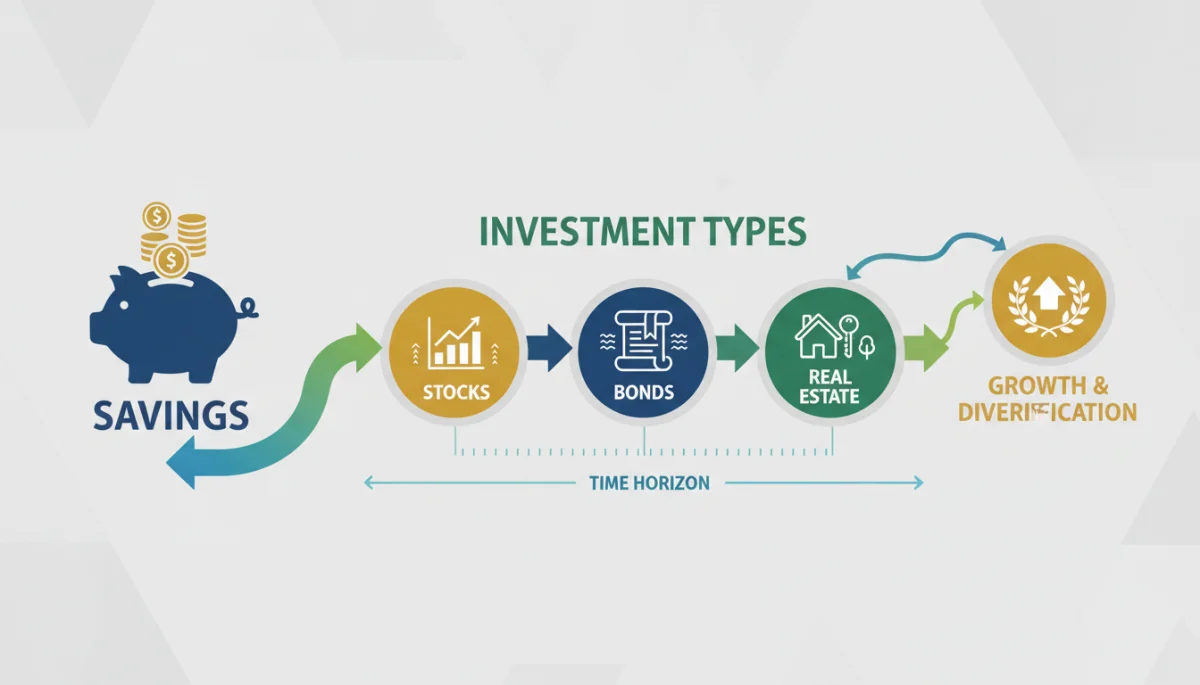
Diversification involves spreading your investments across various asset classes, industries, and geographies to reduce overall risk. Asset allocation, on the other hand, is the strategic decision of how much of your portfolio to invest in different asset categories, such as stocks, bonds, and cash, based on your risk tolerance and financial goals.
strategies for effective diversification
Effective diversification means not putting all your eggs in one basket. If one investment performs poorly, others might perform well, cushioning the impact on your overall portfolio. This strategy is not about avoiding losses entirely but about minimizing their severity. A well-diversified portfolio typically includes a mix of different asset types that react differently to market conditions.
Consider diversifying across various sectors, such as technology, healthcare, and consumer goods. Additionally, geographic diversification, investing in both domestic and international markets, can further reduce risk. The goal is to create a portfolio that is robust enough to withstand various economic cycles and market fluctuations.
understanding asset allocation models
Asset allocation is a strategic decision that dictates the proportion of your investments in different asset classes. There isn’t a one-size-fits-all approach; the ideal asset allocation depends heavily on your age, financial goals, and risk tolerance. A younger investor with a long time horizon might opt for a higher percentage in stocks, which offer greater growth potential but also higher volatility.
- Stocks (equities): Offer growth potential but come with higher volatility.
- Bonds (fixed income): Provide stability and income, generally lower risk than stocks.
- Cash and cash equivalents: Offer liquidity and safety, but lower returns.
- Alternative investments: Include real estate, commodities, or private equity for further diversification.
The concept of rebalancing is also critical in asset allocation. Over time, market movements can cause your original allocation to drift. Rebalancing involves periodically adjusting your portfolio back to your target percentages, which often means selling assets that have performed well and buying those that have underperformed, effectively buying low and selling high.
In essence, mastering diversification and asset allocation is a cornerstone of investing basics in 2026. These strategies empower beginner investors to build portfolios that are both growth-oriented and risk-managed, paving the way for long-term financial success.
Exploring Common Investment Vehicles for Beginners
With a clear understanding of your goals, risk tolerance, and the importance of diversification, the next step is to explore the specific investment vehicles available to you. For beginner investors, identifying accessible and understandable options is key. This section will break down some of the most common and suitable investment products, offering a practical guide to where you can put your money to work.
From traditional stocks and bonds to more modern exchange-traded funds (ETFs) and mutual funds, each vehicle has its own characteristics, risk profiles, and potential returns. Understanding these differences will enable you to make choices that align with your overall investment strategy.
stocks: ownership in companies
Stocks, or equities, represent ownership shares in a company. When you buy a stock, you become a part-owner of that business. The value of your investment can grow if the company performs well and its stock price increases, or if the company pays out dividends. While stocks offer significant growth potential, they also come with higher volatility compared to other asset classes.
For beginners, investing in individual stocks can be risky due to the need for thorough research and understanding of market dynamics. Many prefer to start with diversified stock investments through funds, which we will discuss next.
bonds: lending to governments and corporations
Bonds are essentially loans made to governments or corporations. When you buy a bond, you are lending money to the issuer, who in turn promises to pay you back the principal amount on a specified date (maturity date) and usually pays regular interest payments along the way. Bonds are generally considered less risky than stocks and can provide a steady stream of income, making them a good option for conservative investors or for balancing a portfolio.
Their value can fluctuate with interest rate changes; when interest rates rise, existing bond prices typically fall, and vice versa. However, holding bonds until maturity usually guarantees your principal back, assuming the issuer doesn’t default.
mutual funds and etfs: diversified investing made easy
Mutual funds and Exchange-Traded Funds (ETFs) are excellent choices for beginner investors because they offer instant diversification. Instead of buying individual stocks or bonds, you buy a share of a fund that holds a basket of many different securities. This diversification helps spread risk and often provides professional management.
- Mutual funds: Professionally managed portfolios of stocks, bonds, or other assets.
- ETFs: Similar to mutual funds but trade like stocks on exchanges throughout the day.
- Index funds: A type of mutual fund or ETF that tracks a specific market index.
- Target-date funds: Mutual funds that automatically adjust their asset allocation over time based on a target retirement date.
ETFs are often favored for their lower expense ratios and tax efficiency, while mutual funds can offer a wider range of actively managed strategies. For anyone delving into investing basics in 2026, understanding these pooled investment vehicles is crucial for building a diversified and robust portfolio with relative ease.
The Importance of Continuous Learning and Monitoring
Investing is not a set-it-and-forget-it endeavor; it requires ongoing attention, learning, and periodic adjustments. For beginner investors, understanding that financial education is a continuous journey is as important as making the initial investment decisions. Markets are dynamic, economic conditions shift, and your personal financial situation will evolve, all of which necessitate regular review and adaptation of your investment strategy.
This section emphasizes the critical role of staying informed, monitoring your investments, and being prepared to make adjustments as needed. Continuous learning ensures that your investment approach remains relevant and optimized for achieving your long-term financial goals.
staying informed about market trends
The financial world is constantly in motion. New technologies emerge, regulations change, and global events can have significant impacts on market performance. Staying informed means regularly reading reputable financial news, following economic indicators, and understanding how these factors might affect your investments. This doesn’t mean obsessively checking your portfolio daily, but rather having a general awareness of the broader economic landscape.
Utilize resources like financial news websites, economic reports, and educational webinars. Many brokerage platforms also offer research tools and insights that can help you stay current. The goal is not to predict the market, but to understand its general direction and potential influences.
monitoring and rebalancing your portfolio
Regularly monitoring your portfolio is essential to ensure it remains aligned with your financial goals and risk tolerance. Over time, due to varying performance of different assets, your portfolio’s original asset allocation can drift. For example, if stocks have performed exceptionally well, their proportion in your portfolio might become higher than your target allocation, increasing your overall risk exposure.
- Periodic reviews: Schedule regular times (e.g., quarterly or annually) to assess portfolio performance.
- Asset allocation check: Verify if your current asset mix still aligns with your target.
- Rebalancing: Adjust your portfolio back to your desired asset allocation by buying or selling assets.
- Goal re-evaluation: Confirm that your investments are still on track to meet your financial objectives.
Rebalancing is the process of bringing your portfolio back to its target asset allocation. This often involves selling some of the assets that have grown significantly and investing more in those that have underperformed, effectively buying low and selling high. This disciplined approach helps manage risk and maintain your desired investment profile.
In conclusion, continuous learning and diligent monitoring are indispensable for successful investing. For anyone embracing investing basics in 2026, this ongoing commitment to financial education and portfolio management will be key to navigating market complexities and achieving lasting financial success.
Common Pitfalls and How to Avoid Them
While the journey of investing offers immense potential for wealth creation, it’s also fraught with common pitfalls that can derail even the most well-intentioned beginner investors. Recognizing and actively avoiding these mistakes is a critical component of your financial education. Understanding what not to do can be just as valuable as knowing what to do, safeguarding your capital and emotional well-being.
From emotional decision-making to neglecting due diligence, these errors can lead to suboptimal returns and unnecessary stress. This section aims to equip you with the foresight to sidestep these traps, ensuring a smoother and more successful investment experience.
the dangers of emotional investing
One of the biggest enemies of successful investing is emotion. Fear and greed often drive irrational decisions, leading investors to buy high when markets are booming and sell low during downturns. This ‘buy high, sell low’ cycle is a classic mistake that can severely erode long-term returns. Instead, a disciplined, long-term approach is almost always more effective.
Developing an investment plan based on your financial goals and risk tolerance, and then sticking to it, can help mitigate emotional responses. Automation, such as setting up regular contributions, can also remove the emotional element from investment decisions.
neglecting research and due diligence
Another common pitfall is investing in something you don’t understand, often based on a tip from a friend or a fleeting news headline. Proper research and due diligence are non-negotiable. Before investing in any asset, take the time to understand how it works, its associated risks, and its potential returns. This applies whether you’re buying individual stocks, mutual funds, or alternative assets.
- Understand the asset: Know what you’re investing in and how it generates returns.
- Assess the risks: Be aware of the potential downsides and how they might affect your portfolio.
- Review financial statements: For individual companies, examine their balance sheets and income statements.
- Read prospectuses: For funds, understand their objectives, fees, and holdings.
chasing past performance
It’s natural to be attracted to investments that have performed exceptionally well in the recent past. However, a common adage in investing is that ‘past performance is not indicative of future results.’ Chasing the latest hot stock or fund often means buying at its peak, just before a correction. A more prudent approach is to focus on long-term trends, fundamental value, and diversification rather than short-term surges.
Additionally, avoiding excessive trading due to market noise or trying to time the market can save you significant transaction costs and potential losses. A patient, consistent strategy often yields better results over time.
By being aware of these common pitfalls and actively working to avoid them, beginner investors can significantly improve their chances of long-term success. A robust financial education, grounded in the investing basics in 2026, empowers you to make rational, informed decisions rather than impulsive, emotional ones.
Building a Resilient Investment Portfolio for the Future
Building a resilient investment portfolio is the ultimate goal for any investor, especially for beginners navigating the complexities of 2026. A resilient portfolio is one that can withstand market fluctuations, adapt to economic changes, and continue to grow steadily towards your financial objectives. It’s about constructing a financial shield that protects your assets while still allowing for significant growth over the long term.
This section will consolidate the principles discussed, emphasizing how to integrate them into a cohesive strategy for long-term wealth building. It’s about more than just picking investments; it’s about creating a sustainable and adaptable financial plan.
the power of compounding and long-term perspective
One of the most powerful concepts in investing is compounding, often referred to as the ‘eighth wonder of the world.’ Compounding is the process where the returns on your investments also earn returns, leading to exponential growth over time. The earlier you start investing, the more time your money has to compound, making time your greatest ally in wealth accumulation.
Adopting a long-term perspective helps you ride out short-term market volatility. Instead of reacting to every dip or surge, a long-term view encourages patience and discipline, allowing your investments to grow through various market cycles. This perspective is foundational for building true wealth.
integrating esg factors into your investments
As we advance into 2026, Environmental, Social, and Governance (ESG) factors are becoming increasingly integral to investment decisions. Integrating ESG considerations into your portfolio means investing in companies that demonstrate strong ethical practices, environmental stewardship, and sound corporate governance. This approach is not just about aligning your investments with your values but also about identifying companies that are likely to be more sustainable and resilient in the long run.
Many studies suggest that companies with strong ESG profiles often outperform their peers over time, making ESG investing a powerful tool for both financial returns and positive societal impact. For beginner investors, looking for ESG-focused funds or companies can be a smart strategy.
automating your investments for consistency
Consistency is key in investing, and one of the best ways to achieve it is through automation. Setting up automatic transfers from your bank account to your investment account on a regular basis ensures that you are consistently contributing to your portfolio, regardless of market conditions or your daily schedule. This practice, known as dollar-cost averaging, involves investing a fixed amount of money at regular intervals.
- Dollar-cost averaging: Investing a fixed amount regularly, reducing risk from market timing.
- Automatic contributions: Set up recurring transfers to your investment accounts.
- Reinvesting dividends: Automatically put any dividend payments back into your investments for compounding.
- Reviewing automated settings: Periodically check and adjust your automatic contributions as your financial situation changes.
Dollar-cost averaging helps smooth out the average cost of your investments over time, as you buy more shares when prices are low and fewer shares when prices are high. This disciplined approach removes emotion from the equation and ensures steady progress towards your financial goals.
By embracing these strategies – leveraging compounding, considering ESG factors, and automating your contributions – you can build a truly resilient investment portfolio. This holistic approach to investing basics in 2026 empowers beginner investors to navigate the future with confidence and secure their financial well-being.
| Key Point | Brief Description |
|---|---|
| Define Goals & Risk | Establish clear financial objectives and understand your personal risk tolerance before investing. |
| Diversify & Allocate | Spread investments across various assets (stocks, bonds, funds) to reduce risk and optimize returns. |
| Utilize Funds | ETFs and mutual funds offer accessible, diversified investing for beginners. |
| Continuous Learning | Stay informed about market trends and regularly monitor/rebalance your portfolio for optimal performance. |
Frequently Asked Questions About Investing in 2026
The very first step for a beginner investor in 2026 is to define clear financial goals and assess their personal risk tolerance. This foundation guides all subsequent investment decisions, ensuring your strategy aligns with your aspirations and comfort level.
By 2026, technology has made investing more accessible through robo-advisors, fractional shares, and mobile trading apps. AI-driven insights also offer advanced analytics, simplifying complex market data for new investors and democratizing portfolio management.
Generally, investing in individual stocks is considered higher risk for beginners due to the extensive research required. Pooled investment vehicles like ETFs or mutual funds, which offer instant diversification, are often a more recommended starting point for new investors.
ESG (Environmental, Social, Governance) factors are increasingly important. Integrating them means investing in ethical, sustainable companies. This not only aligns with personal values but can also lead to more resilient portfolios, as strong ESG performers often show better long-term financial stability.
Beginner investors should aim to rebalance their portfolio periodically, typically once or twice a year. This ensures the asset allocation remains aligned with their target risk level and financial goals, preventing drift caused by market performance.
Conclusion
Embarking on the investment journey in 2026 as a beginner investor is an empowering step towards securing your financial future. By understanding the core principles of investing basics in 2026, from setting clear goals and assessing risk tolerance to embracing diversification and utilizing accessible investment vehicles, you lay a robust foundation for wealth creation. Remember that continuous learning, diligent monitoring, and avoiding common pitfalls are just as crucial as your initial choices. The financial landscape is ever-evolving, but with a disciplined approach and a commitment to ongoing financial education, you can confidently navigate its complexities and build a resilient portfolio designed for long-term success. Start today, stay informed, and watch your financial aspirations take root and flourish.
